Cooperative Board Games: Why Playing Together Beats Playing Against
Cooperative board games let everyone win or lose as a team. Discover how they work, why they are so relaxing, and the best co-op games for families and friends.
In this guide
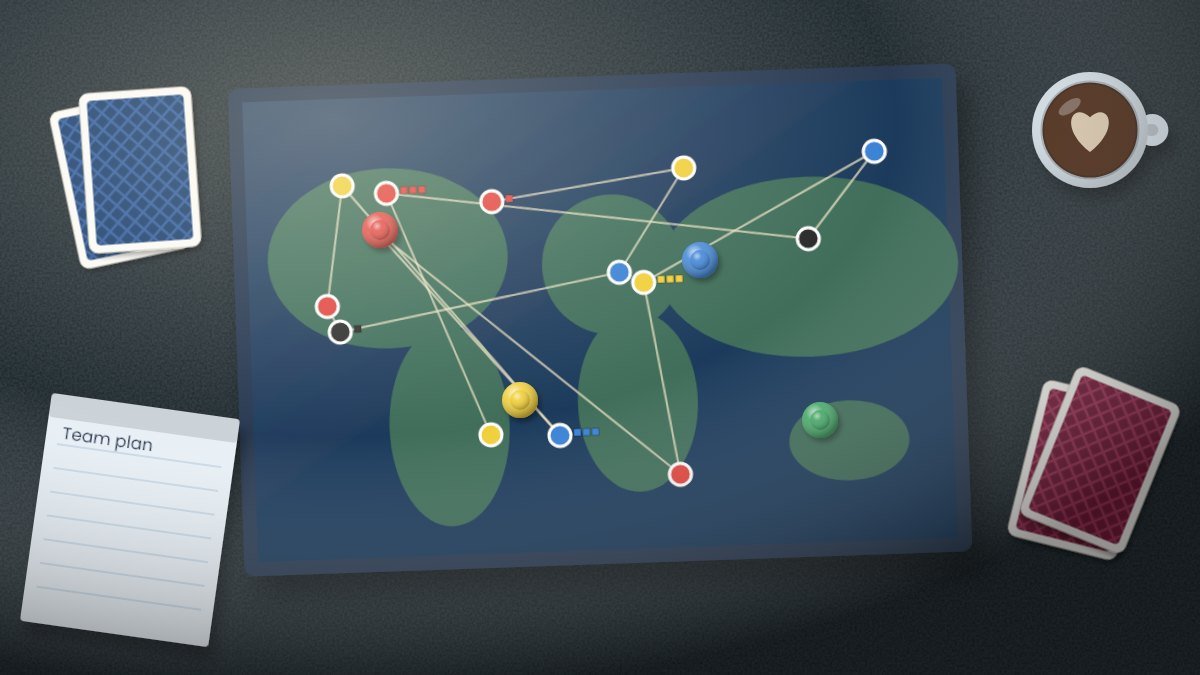
In most board games, someone wins and everyone else loses. Cooperative games flip that idea on its head. The players form a team, and the game itself becomes the opponent. You win together or you lose together.
That small change has a big effect on the mood at the table. Instead of guarding your cards and plotting against your friends, you are talking, planning and cheering as a group. For many people, especially families and couples, cooperative games are the most relaxing way to play.
How cooperative games work
Every cooperative game has some kind of challenge that the players must overcome before time runs out. A deck of cards or a set of rules makes the game "fight back" each turn. Common examples include:
- Spreading problems. Diseases, fires or floods spread unless you contain them.
- A ticking clock. You must finish a goal before a deck of cards runs out.
- Limited communication. Players hold hidden information and must find clever ways to share it.
The difficulty is usually adjustable, so you can start easy and turn up the challenge as your team improves.
Why co-op games feel so relaxing
No one is left out. Because everyone is on the same side, a struggling player gets help instead of being knocked out.
Less conflict. Arguments are about strategy, not about who stole whose resources.
Great for mixed ages. Kids and adults can play together without anyone feeling outmatched.
Losing is fun, too. Since the whole table loses together, a defeat feels like a shared story rather than a personal failure. "We were one card away!" is a great way to end a night.
Classic cooperative board games to try
Pandemic
Designed by Matt Leacock and first released in 2008, Pandemic is the game that introduced many people to cooperative play. Each player takes a role, like Medic or Scientist, and the team races around the world to treat outbreaks and discover cures. It is tense in the best way.
Forbidden Island
Also by Matt Leacock, Forbidden Island is a lighter, family-friendly game in which players collect treasures from a sinking island and escape by helicopter. It plays in about 30 minutes and is a great choice for kids around age 10 and up.
Hanabi
Hanabi is a small card game about putting on a fireworks show. The twist is that you hold your cards facing outward, so you can see everyone's hand except your own. Players give limited clues to help one another play cards in the right order. It won the Spiel des Jahres award in 2013.
The Crew
The Crew turns traditional trick-taking, the style of play in Spades and Hearts, into a cooperative space mission. Each mission adds new challenges, and communication is limited, so you have to read your teammates carefully. It is perfect for card game fans.
Sky Team
A two-player cooperative game about landing a plane. Each player places dice in secret, and you must trust your partner to make the right move. It is ideal for couples.
Mysterium
In Mysterium, one player is a ghost who communicates only through dreamlike picture cards, while the others act as psychics trying to solve a murder. It is creative, atmospheric and a lot of fun with a group.
Watch out for the "quarterback" problem
The biggest pitfall in cooperative games is when one experienced player starts telling everyone what to do. This is often called "quarterbacking" or the "alpha player" problem, and it takes the fun away from everyone else.
A few ways to avoid it:
- Let each player make the final call on their own turn. Suggestions are welcome, but decisions belong to the active player.
- Choose games with hidden information. Games like Hanabi and The Crew naturally prevent one person from running the show.
- Ask questions instead of giving orders. "What are you thinking?" beats "Move there."
Which cooperative game should you start with?
| If you want... | Try |
|---|---|
| A family-friendly first game | Forbidden Island |
| A classic strategy challenge | Pandemic |
| A small card game for travel | Hanabi or The Crew |
| A game for two | Sky Team |
| A creative party game | Mysterium |
The bottom line
Cooperative board games are about shared stories, not scorecards. They are a great way to bring together people with different skill levels, calm down a competitive group or simply enjoy a night of teamwork. Start with a light game, keep the decisions in each player's hands, and do not be surprised if your group starts asking for co-op games every week.