Can Brain Games Really Keep Your Mind Sharp? What the Research Says
Do puzzles and brain-training apps actually make you smarter? A balanced look at what research says about brain games, plus habits that support a healthy mind.
In this guide
Brain games are everywhere: apps that promise a sharper memory, puzzle books labeled "brain fitness" and daily challenges that claim to keep you young. It is natural to wonder whether any of it works. The honest answer is more nuanced than the marketing suggests, but there is still plenty of good news for people who love puzzles.
This article is for general information only and is not medical advice. If you have concerns about memory or thinking, talk to a doctor.
What "brain training" claims to do
Most brain-training products make some version of the same promise: practicing certain tasks will improve memory, attention or problem-solving in everyday life and may even protect against age-related decline. The key question researchers ask is about transfer. Getting better at a specific game is easy. The harder question is whether that improvement carries over to other skills.
What the research suggests
You get better at what you practice
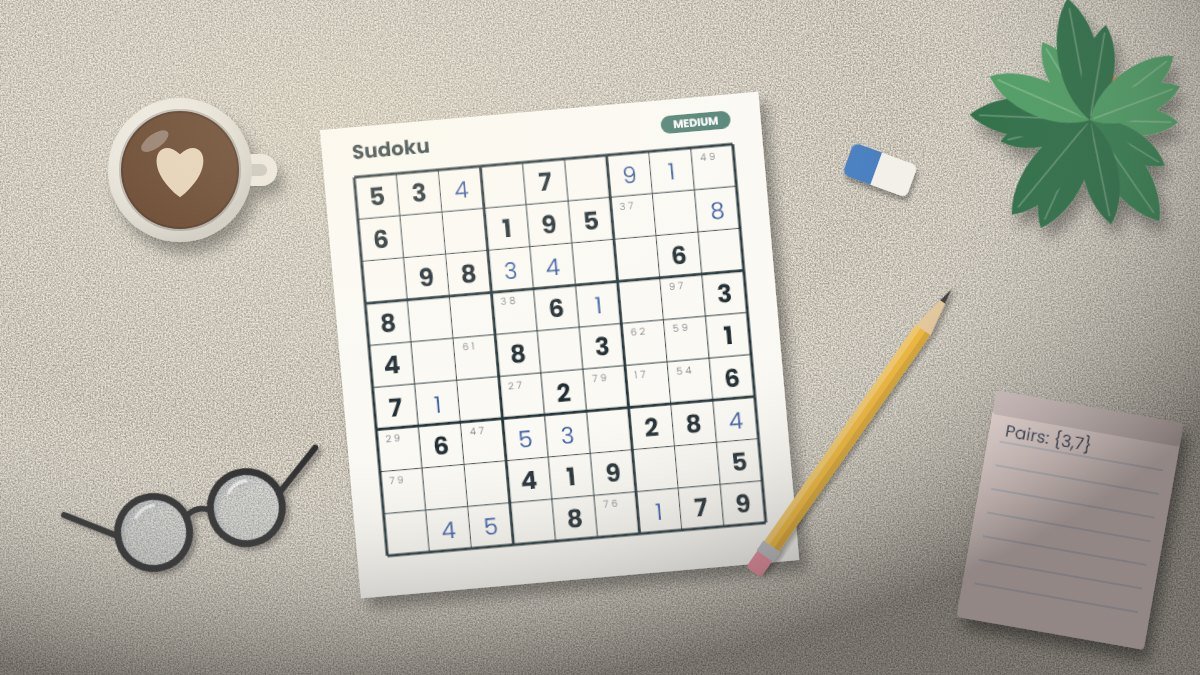
Study after study shows that people improve at the specific tasks they train on. If you do lots of Sudoku, you become a better Sudoku solver. That is real and satisfying, but it does not automatically make you better at remembering where you left your keys.
Broad benefits are less certain
In 2014, a group of about 70 scientists organized by the Stanford Center on Longevity and the Max Planck Institute for Human Development issued a statement cautioning that there was little compelling evidence that commercial brain games could reduce or reverse cognitive decline. Other researchers responded with a letter pointing to promising studies. The debate shows that the science is still developing.
In 2016, the U.S. Federal Trade Commission reached a $2 million settlement with the company behind the Lumosity app over advertising claims that the FTC said were not supported by evidence. The case is a reminder to be skeptical of products that promise dramatic results.
Some training shows promise
Some research has been more encouraging. The large ACTIVE study, funded by the National Institutes of Health, followed older adults who took part in different types of cognitive training. Some groups showed improvements in the trained abilities that lasted for years, and researchers have continued to study possible longer-term effects. Results like these suggest that certain kinds of mental training may have value, even if they are not a cure-all.
Why puzzles are still worth doing
Even without miracle claims, puzzles have a lot going for them:
- They are enjoyable. Doing something you like is valuable on its own.
- They can help you relax. Focusing on a single, solvable task can be a calming break from everyday stress.
- They can be social. Solving a crossword with a partner or comparing daily puzzle results with friends builds connection.
- They encourage learning. Crosswords teach new words; logic puzzles build patience and careful thinking.
Habits linked with long-term brain health
Health organizations generally point to a combination of lifestyle factors that support healthy aging, including:
- Regular physical activity
- Good sleep
- A balanced diet
- Managing blood pressure and other health conditions with your doctor
- Staying socially connected
- Continuing to learn new things
Notice that the last item is broad. Learning a language, picking up an instrument, taking a class or mastering a complex new game all challenge the brain in varied ways. Variety and novelty may matter more than repeating the same app every day.
How to make puzzles part of a healthy routine
- Choose games you enjoy. You are more likely to stick with them.
- Mix it up. Rotate between word puzzles, logic puzzles and strategy games.
- Increase the challenge gradually. If a puzzle gets too easy, try a harder level or a new type.
- Play with others. Board games, card games and shared puzzles add a social element.
- Balance screen time. Pen-and-paper puzzles and tabletop games are a nice break from phones.
- Pair puzzles with movement. A walk followed by a crossword is a great daily ritual.
Red flags in brain-game marketing
Be cautious with any product that claims to:
- Prevent or reverse dementia or Alzheimer's disease
- Raise your IQ dramatically
- Deliver results in just a few minutes a day with no other changes
- Replace advice from a medical professional
The bottom line
Brain games are a wonderful hobby, not a medical treatment. Enjoy them because they are fun, relaxing and social. For long-term brain health, pair your puzzles with exercise, good sleep, healthy eating, social time and a habit of learning new things. If you notice changes in your memory or thinking, the best next step is a conversation with your doctor.