Jigsaw Puzzle Tips: How to Finish a 1,000-Piece Puzzle
Tackling your first 1,000-piece jigsaw puzzle? These practical tips for sorting, edges, lighting and workspace setup will help you finish with less frustration.
In this guide
A 1,000-piece jigsaw puzzle can look overwhelming when you first pour it out of the box. But with a simple system, it turns into one of the most relaxing hobbies around. Puzzles give your mind a gentle focus, a break from screens and a satisfying sense of progress with every piece that clicks into place.
Set up a good workspace
- Choose a table you will not need for a while. A 1,000-piece puzzle is usually around 20 by 27 inches when finished, and you will want extra room for loose pieces.
- Use a puzzle mat or board if you need to move it. Roll-up mats and portable boards with drawers let you put the puzzle away between sessions.
- Get good lighting. Bright, even, daylight-style light makes subtle color differences easier to see. A desk lamp you can aim helps a lot in the evening.
- Sit comfortably. An adjustable chair, or even standing for part of the time, helps you avoid a stiff neck.
Flip every piece face up
It takes some time, but turning all the pieces picture-side up at the start saves much more time later. As you flip, you can start your first sort.
Find the edges first
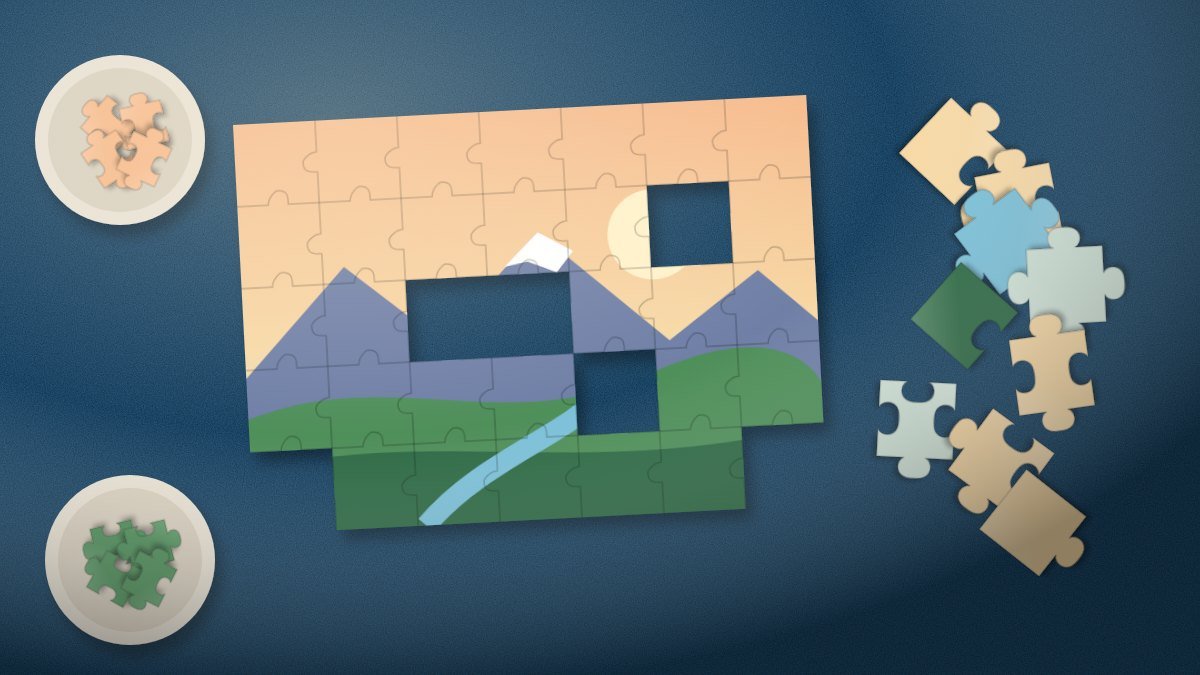
Most puzzlers begin with the border. Edge pieces have one flat side, and corners have two. Pull these out as you flip and build the frame first. It gives you the exact size of the finished puzzle and a structure to build inward from.
Sort by color and pattern
After the edges, sort the remaining pieces into groups. Some useful categories:
- Distinct colors like a red barn, a blue sky or a yellow field
- Textures and patterns such as brick, water ripples or foliage
- Text, signs or sharp lines, which are often the easiest areas to assemble
- "Mystery" pieces that do not fit anywhere obvious yet
Small trays, paper plates or muffin tins make great sorting containers.
Start with the easy areas
Work on the most distinctive sections first: a building, a face, a bold object or any text. These go together quickly and give you anchor points in the middle of the puzzle. Leave large areas of plain sky or water for last.
Sort by shape for tricky areas
When you are left with a big area of similar color, color sorting stops helping. Switch to sorting by shape. Most puzzle pieces have a combination of "knobs" (tabs that stick out) and "holes" (blanks that go in). Common groupings include:
- Two knobs and two holes
- Four knobs
- Four holes
- Three knobs and one hole
- One knob and three holes
When you look at a gap in the puzzle, you can see exactly which shape you need and only check that pile.
Use the box image wisely
The box picture is your map. Prop it up where you can see it, and use it to locate where a group of pieces belongs. Some puzzlers enjoy the extra challenge of hiding the box, but for your first big puzzle, keep it close.
Take breaks
It is surprisingly common to stare at a section for 20 minutes, walk away, and then spot the right piece within seconds when you return. Fresh eyes are one of the best puzzle tools.
Choose the right first puzzle
Not all 1,000-piece puzzles are equally hard. For your first one, look for:
| Easier | Harder |
|---|---|
| Lots of distinct colors and objects | Large areas of one color |
| Clear, sharp details | Blurry or soft-focus images |
| Different sections with distinct themes | Repeating patterns |
| Pieces in varied shapes | "Ribbon cut" pieces that all look similar |
Collage-style images, maps, illustrated scenes and bookshelves are great choices for beginners.
What to do when you finish
- Admire it. Take a photo before anything else.
- Glue and frame it. Puzzle glue or adhesive sheets let you hang your work.
- Pass it on. Swap with friends, donate it or trade at a local puzzle exchange.
The bottom line
A 1,000-piece puzzle is just a lot of small wins in a row. Flip the pieces, build the frame, sort by color, tackle the easy sections first and switch to shape sorting for the hard parts. Above all, go slow. The point is to relax, not to race.