Spades Strategy for Beginners: Bidding, Bags and Teamwork
Learn how to play Spades and improve fast with beginner-friendly tips on bidding, counting tricks, avoiding bags and communicating with your partner.
In this guide
Spades is one of the most popular partnership card games in the United States. It is a staple at family reunions, college dorms and cookouts, and it is easy to learn but rich in strategy. This guide covers the basic rules and the most important beginner strategies.
The basics
- Players: Four, in two teams of two. Partners sit across from each other.
- Deck: A standard 52-card deck. Aces are high.
- Trump suit: Spades are always trump, which means any spade beats any card from another suit.
- Deal: All 52 cards are dealt, so each player gets 13.
Some groups add Jokers or "big and little" Jokers as top trumps. These house rules vary, so agree on them before you play.
How a hand works
1. Bidding
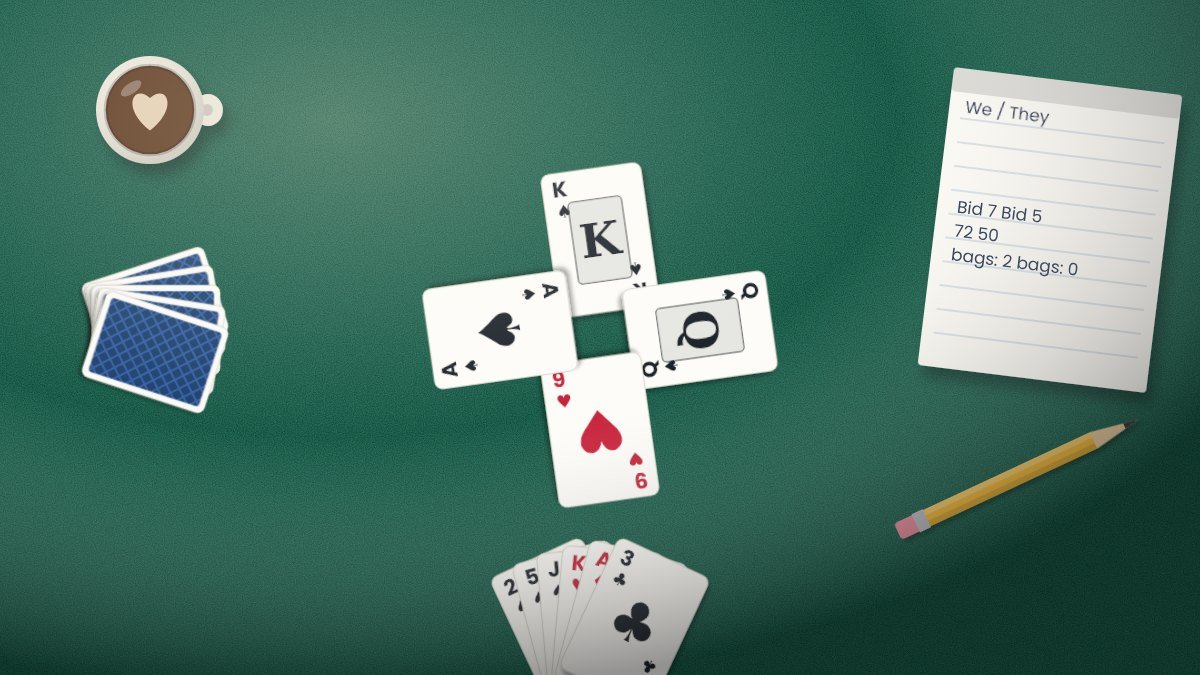
After looking at their cards, each player bids the number of tricks they expect to win. Partners' bids are added together to make the team's contract. For example, if you bid 4 and your partner bids 3, your team needs at least 7 tricks.
A player can also bid nil, which means they plan to win zero tricks. Nil is a big risk with a big reward.
2. Playing tricks
The player to the dealer's left leads the first trick. Everyone must follow suit if they can. If you cannot, you may play any card, including a spade. The highest spade wins the trick; if no spades are played, the highest card of the suit led wins.
Spades usually cannot be led until they have been broken, meaning someone played a spade on a trick because they could not follow suit, unless a player holds nothing but spades.
3. Scoring
Scoring varies by house rules, but a common system is:
- Making your contract: 10 points per trick bid, plus 1 point for each extra trick.
- Failing your contract: Lose 10 points per trick bid.
- Bags: Extra tricks beyond your bid are called bags or overtricks. Collecting 10 bags usually costs your team 100 points.
- Nil: A successful nil bid usually earns 100 points; a failed nil loses 100.
Games are often played to 500 points.
Beginner bidding strategy
Bidding accurately is the most important skill in Spades. Here is a simple method to estimate your tricks:
- Aces and Kings in non-spade suits: Count each Ace as about one trick. Count a King as a trick if you also hold the Ace of that suit, or if the suit is short.
- High spades: The Ace, King and Queen of spades are usually reliable tricks.
- Spade length: Holding four or more spades often adds tricks, since your low spades can trump other suits late in the hand.
- Short suits: If you have zero or one card in a suit, you can trump in with spades early. Count that as a possible trick if you have spades to spare.
Playing strategy
Count the spades
There are 13 spades in the deck. Keep track of how many have been played. Knowing whether the opponents still have high spades helps you decide when your King of spades is safe.
Lead your strong suits
Leading an Ace from a long suit usually wins the trick and pulls cards from opponents. Lead suits where you hold top cards to take control.
Protect your partner
Teamwork is the heart of Spades. If your partner bid nil, try to win tricks with high cards so they can safely play low. If your partner is close to making the contract, play to support them rather than chasing your own tricks.
Avoid unnecessary bags
Once your team has made its bid, try to lose tricks rather than win extras. Play lower cards and let the opponents take tricks when it does not hurt you.
Pay attention to your partner's bid
A high bid from your partner suggests strong cards. A low bid suggests weakness. Adjust your play to cover their weak areas.
Common beginner mistakes
- Overbidding with a weak hand because you hold a few face cards in a single suit.
- Forgetting about bags until your team has nine of them.
- Trumping your partner's winning trick. If your partner's card is already winning, you usually do not need to spend a spade on it.
- Leading spades too early, pulling out your own team's strength.
Spades etiquette
Table talk is part of the fun, but most groups agree that partners should not share specific information about their hands during play. Agree on the house rules for Jokers, nil bids and scoring before the first deal to avoid arguments later.
The bottom line
Spades is a game of accurate bidding and smart teamwork. Count your sure tricks carefully, keep track of spades, support your partner and watch your bags. With a few games under your belt, you will be ready to hold your own at any family card table.