Daily Puzzle Games and Why They Are So Satisfying
From Wordle to Connections, daily puzzle games have become a beloved ritual. Here is why one puzzle a day feels so rewarding, plus popular games to try.
In this guide
For millions of people, the day starts with coffee and a puzzle. Daily puzzle games, which release just one new challenge every 24 hours, have become one of the most popular forms of casual gaming. They are simple, social and surprisingly satisfying. Here is why they work so well, plus a few favorites to try.
A brief history of the daily puzzle boom
Newspaper crosswords have been a daily ritual for about a century, but the modern craze took off in late 2021 with Wordle. Created by software engineer Josh Wardle as a gift for his partner, the five-letter guessing game exploded in popularity, partly thanks to its shareable colored grid. The New York Times bought Wordle in early 2022 and has since added more daily games to its lineup.
Why one puzzle a day feels so good
It is limited
You only get one puzzle per day. That limit makes each puzzle feel special and keeps the habit from taking over your time. When you are done, you are done until tomorrow.
It is quick
Most daily puzzles take five to fifteen minutes. That makes them easy to fit into a morning routine, a lunch break or a commute.
Everyone gets the same puzzle
Because everyone solves the same puzzle on the same day, it becomes a shared experience. Comparing results with friends and family creates easy, friendly conversations.
Streaks and small wins
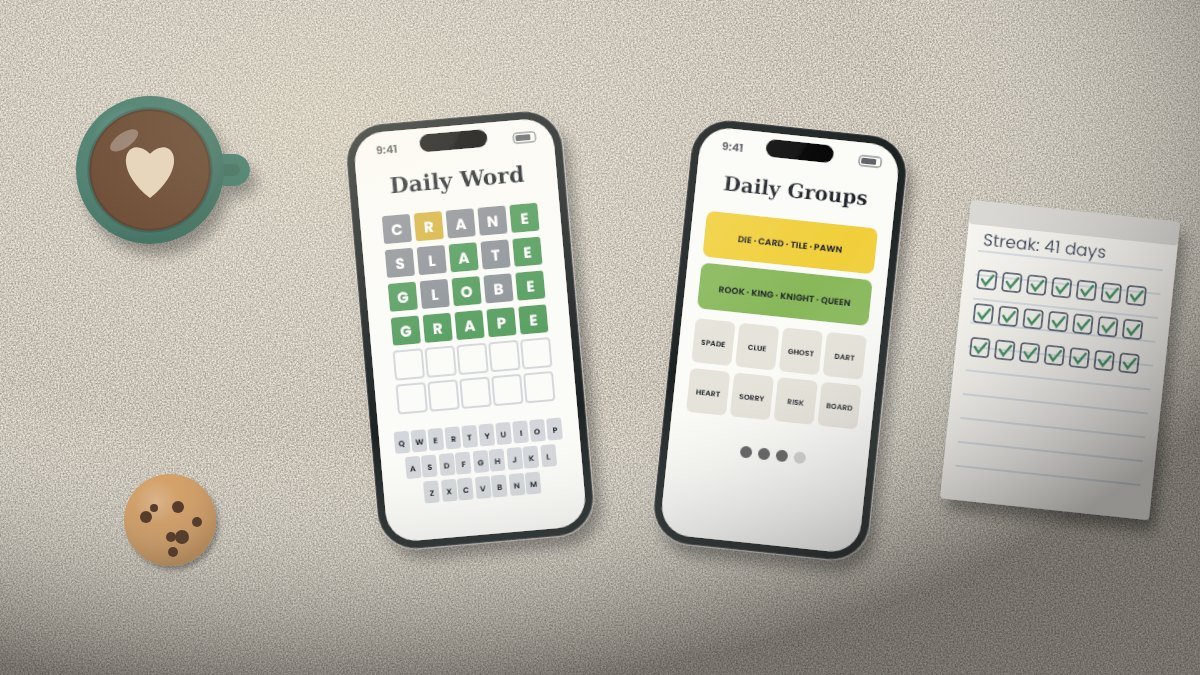
Many daily games track your streak of consecutive days. Watching that number grow is motivating, and solving the puzzle gives a small, reliable sense of accomplishment.
No pressure to spend
The most popular daily puzzles are free to play or included in a subscription, with no energy timers or pay-to-win features.
Popular daily puzzles to try
Wordle
Guess the five-letter word in six tries. Colored tiles show which letters are in the right spot, in the word but in a different spot or not in the word at all.
Connections
Sort 16 words into four groups of four based on hidden links. Some groups are straightforward, while others are tricky, with red herrings designed to fool you.
Strands
A themed word search where you find words related to a hidden theme, plus a "spangram" that spans the board and describes the theme.
The Mini Crossword
A small crossword, often 5×5, that takes just a minute or two. It is perfect for crossword beginners.
Spelling Bee
Make as many words as possible from seven letters, always including the center letter. You can solve as little or as much as you like.
LinkedIn's daily games
LinkedIn offers a set of free daily puzzles for members, such as Queens, a logic puzzle about placing pieces on a colored grid, and Pinpoint, a word association game.
Daily Sudoku and crosswords
Many newspapers, puzzle websites and apps publish a daily Sudoku or crossword. Look for ones that match your preferred difficulty.
How to build a healthy puzzle routine
- Pick two or three favorites instead of trying every daily puzzle.
- Pair puzzles with an existing habit, like your morning coffee.
- Share with friends or family in a group chat for friendly competition.
- Avoid spoilers by solving before checking social media.
- Take a break if a puzzle feels like a chore. It should be enjoyable.
Daily puzzle comparison
| Puzzle | Type | Time | Good for |
|---|---|---|---|
| Wordle | Word guessing | 2–5 min | Everyone |
| Connections | Word grouping | 5–10 min | Lateral thinkers |
| Strands | Word search | 5–10 min | Relaxed solving |
| Mini Crossword | Crossword | 1–3 min | Beginners |
| Spelling Bee | Word building | Open-ended | Word lovers |
Some daily games may require a free account or subscription for full access.
The bottom line
Daily puzzle games are satisfying because they are small, shared and limited. One puzzle a day gives you a moment of focus, a sense of accomplishment and something fun to talk about with friends. Pick a favorite or two and enjoy the ritual.